
When a customer walks into a multi-department store, automotive showroom, or large-format medical clinic, their sensory experience changes as they move between spaces. The acoustic environment required at a busy checkout counter is fundamentally different from the atmosphere needed in a high-value product display or a quiet waiting lounge.
Many retail operations managers and marketing directors rely on a single, uniform audio feed piped across an entire building. Playing the same music track and promotional announcements at a single volume level throughout an entire venue creates acoustic clashes, listener fatigue, and premature store exits.
By implementing acoustic zone mapping, commercial venues can tailor background audio profiles and decibel levels to specific zones within a single footprint. This approach optimizes customer dwell times, improves staff comfort, and increases average transaction values.
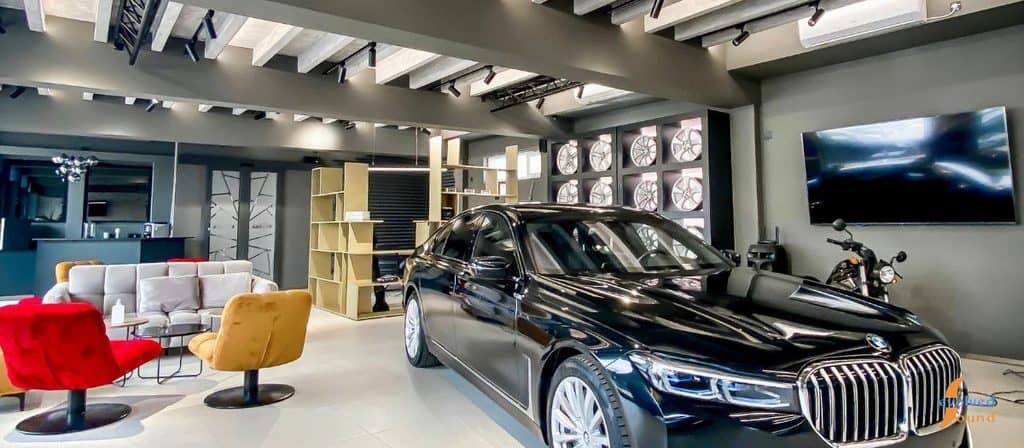
How Acoustic Zone Mapping Works in Retail
Understanding Acoustic Zone Mapping
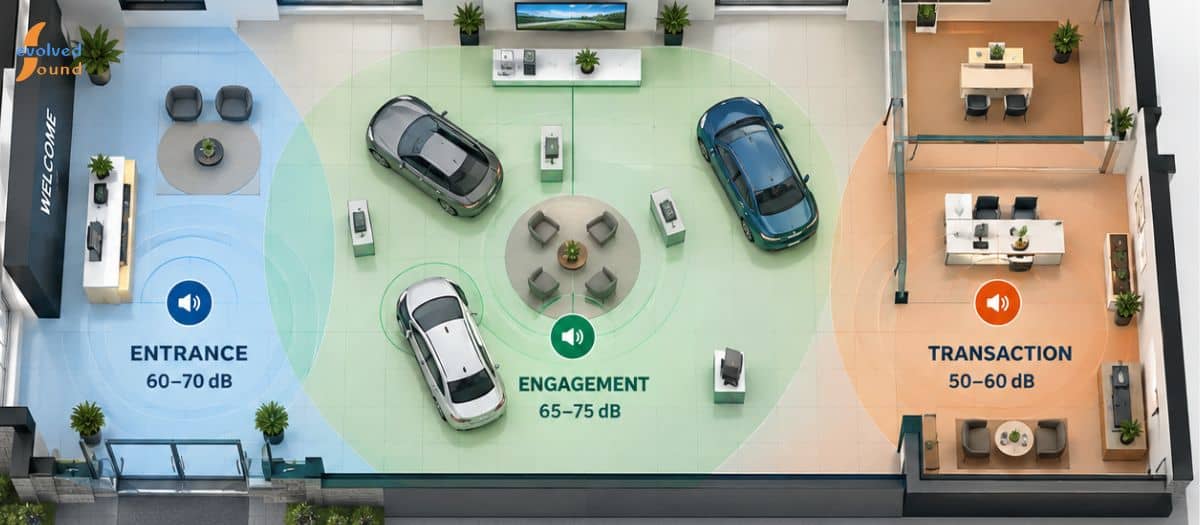
Acoustic zone mapping is the strategic division of a physical commercial footprint into distinct auditory zones based on customer mindset, foot traffic density, and ambient noise levels.
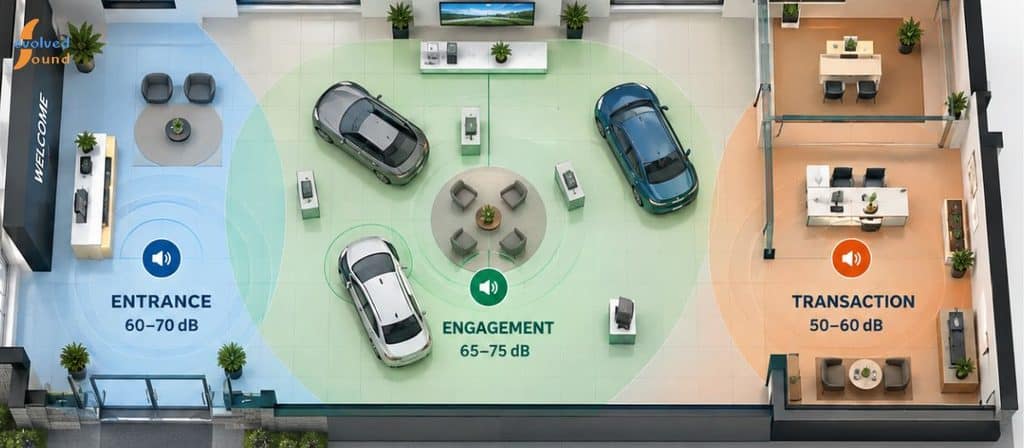
In a large retail or showroom environment, a customer passes through three primary sensory zones:
- The Transition Zone (Entrance & Main Aisle): High ambient noise from automatic doors, street traffic, and initial footfall. Audio must be welcoming, upbeat, and pitched to overcome external noise without overwhelming the senses.
- The Engagement Zone (Product Displays & Lounges): Lower foot traffic where customers evaluate high-value purchases or hold private conversations. Audio requires a relaxed, controlled tempo with smooth frequencies that encourage browsing without causing distraction.
- The Transaction Zone (Service Counters & Checkouts): High operational noise from registers, staff conversations, and packing. Audio needs clear mid-range clarity to maintain privacy during payments while keeping queueing customers calm.
Why Retail Stores Need Acoustic Zone Mapping
Relying on a single amplifier and audio feed forces you to set a volume level that is either too quiet at the entrance or deafeningly loud in private consultation areas. Multi-zone sound architecture resolves this friction entirely.
Acoustic Zone Mapping for Balanced Sound Levels
How Store Layout Affects Acoustic Zone Mapping
Every department in a commercial building possesses unique acoustic properties. Hard surfaces like polished concrete, glass facades, and tiled floors reflect sound waves, creating harsh echoes. Soft furnishings, carpeted displays, and clothing racks absorb sound, muffling audio clarity.
Balancing Sound Levels in Each Zone
Acoustic zone mapping uses dedicated, zone-controlled hardware to balance decibel levels and equalization settings automatically across varied spaces:
- Entrance Zone: High Ambient Noise -> Bright, Warm Frequencies (68-72 dB)
- Display Zone: High Absorption -> Balanced, Low-Tempo Beats (62-65 dB)
- Checkout Zone: Reflective Hard Surface -> Privacy Masking Profile (65-68 dB)
By balancing output levels per zone, customers move seamlessly through your store without experiencing sudden jumps in volume or unintelligible, echoing announcements.
Multi-Zone Audio for Targeted Retail Promotions
How Multi-Zone Audio Supports Retail Marketing
Beyond background music, the true revenue-generating power of zone mapping lies in targeted promotional messaging. Playing a general store announcement about trade discounts across the consumer retail floor wastes promotional airtime.
Targeted Promotional Messages with Multi-Zone Audio
With Evolved Radio multi-zone architecture, promotional messages play exclusively in the relevant department without disturbing customers in other areas:
- In the Power Tool / Hardware Section: Scheduled audio inserts feature specific accessory upsells or trade account sign-ups.
- In the Service Lounge: Audio messaging focuses on upcoming maintenance service packages or vehicle upgrade options.
- In the Main Checkout Area: Brief prompts remind waiting shoppers about loyalty club enrollment or impulse add-on items at the register.
Delivering relevant messaging at the exact moment a customer is evaluating a product category dramatically improves promotional conversion rates.
Commercial Hardware for Acoustic Zone Mapping
Choosing Reliable Multi-Zone Audio Hardware
Running a multi-zone audio setup requires commercial-grade playback hardware built specifically for business environments. Consumer streaming devices and domestic multi-room speakers are not engineered for continuous commercial operation and rely entirely on uninterrupted local Wi-Fi networks.
How Acoustic Zone Mapping Supports Playback Reliability
Evolved Sound hardware units store and process your multi-zone audio profile locally on site. The system uses your broadband connection solely for silent, off-peak background updates and remote health monitoring. If your local internet connection drops out, your zone-mapped background music and scheduled promotional messages continue playing uninterrupted across every department.
Direct-Licenced Music for Commercial Venues
Every track in the Evolved Radio catalogue is direct-licenced, completely eliminating the need for annual public performance fees to collection bodies like APRA AMCOS or PPCA.
Acoustic Zone Mapping Implementation Checklist
- Map Physical Boundaries: Identify distinct customer touchpoints based on noise levels and purchase intent before selecting hardware.
- Audit Surface Materials: Adjust speaker placement and frequency settings to account for sound-reflecting glass and sound-absorbing displays.
- Isolate Promotional Prompts: Ensure promotional messaging is relevant only to the department where it is broadcast.
- Eliminate Royalty Fees: Utilize direct-licenced background music to remove annual public performance licensing overheads.
Acoustic Zone Mapping for Retail Soundscapes
At Evolved Sound, we design and install tailored in-store music and dynamic audio marketing systems for retail networks, automotive showrooms, and commercial venues across Australia.
Ready to transform your venue atmosphere and increase customer dwell time? Enquire here for a custom Acoustic Zone Mapping Audit